If you’ve ever dreamed of baking bread at home that tastes like it’s fresh from an artisan bakery, then this Homemade Artisan Bread Recipe is going to become your new best friend. With just a handful of simple, wholesome ingredients and a bit of patience, you’ll create beautifully crusty, flavor-packed loaves that will fill your kitchen with an irresistible aroma. It’s the kind of bread that transforms any meal into a celebration and invites you to savor every slice fresh out of the oven.
Ingredients You’ll Need

For this Homemade Artisan Bread Recipe, you only need a few essential ingredients, each playing an important role in creating that perfect crust, crumb, and flavor. Using quality basics will truly maximize your results and make your bread sing.
- Bread flour (3 1/4 cups / 430g): Provides the protein needed for structure and chewiness.
- Instant yeast (2 teaspoons / 6g): Gives your dough the rise and airiness but is super easy to work with.
- Coarse salt (2 teaspoons / 9g): Balances flavor and strengthens the gluten network for better texture.
- Water (1 1/2 cups / 360ml): The perfect temperature helps activate the yeast gently without shocking it.
- Optional: Cornmeal for dusting: Adds a lovely rustic crunch to the bottom crust of your bread.
You’ll find the full ingredient list, instructions, and print option in the recipe card below.
How to Make Homemade Artisan Bread Recipe
Step 1: Mix the Dough
Start by whisking your bread flour, instant yeast, and coarse salt together in a large ungreased bowl. Then, pour in water that’s close to room temperature and gently fold everything with a spatula or wooden spoon. Your dough might look dry and shaggy at first, but don’t worry—keep mixing or use your hands to bring it all together into a sticky ball. This initial step forms the beautiful structure for your bread.
Step 2: Let It Rise
Cover your dough tightly with plastic wrap or foil and leave it to rise at room temperature for 2 to 3 hours. The dough should almost double in size, stick somewhat to the bowl, and be bubbly — signs that your yeast is hard at work creating that airy crumb.
Step 3: Chill for Deep Flavor
For the best flavor and texture, pop your risen dough uncovered into the refrigerator for at least 12 hours and up to 3 days. The slow chill allows the gluten to relax and the flavors to develop a deeper, richer complexity. Don’t worry if it deflates a bit while chilling—that’s totally normal.
Step 4: Shape Your Loaves
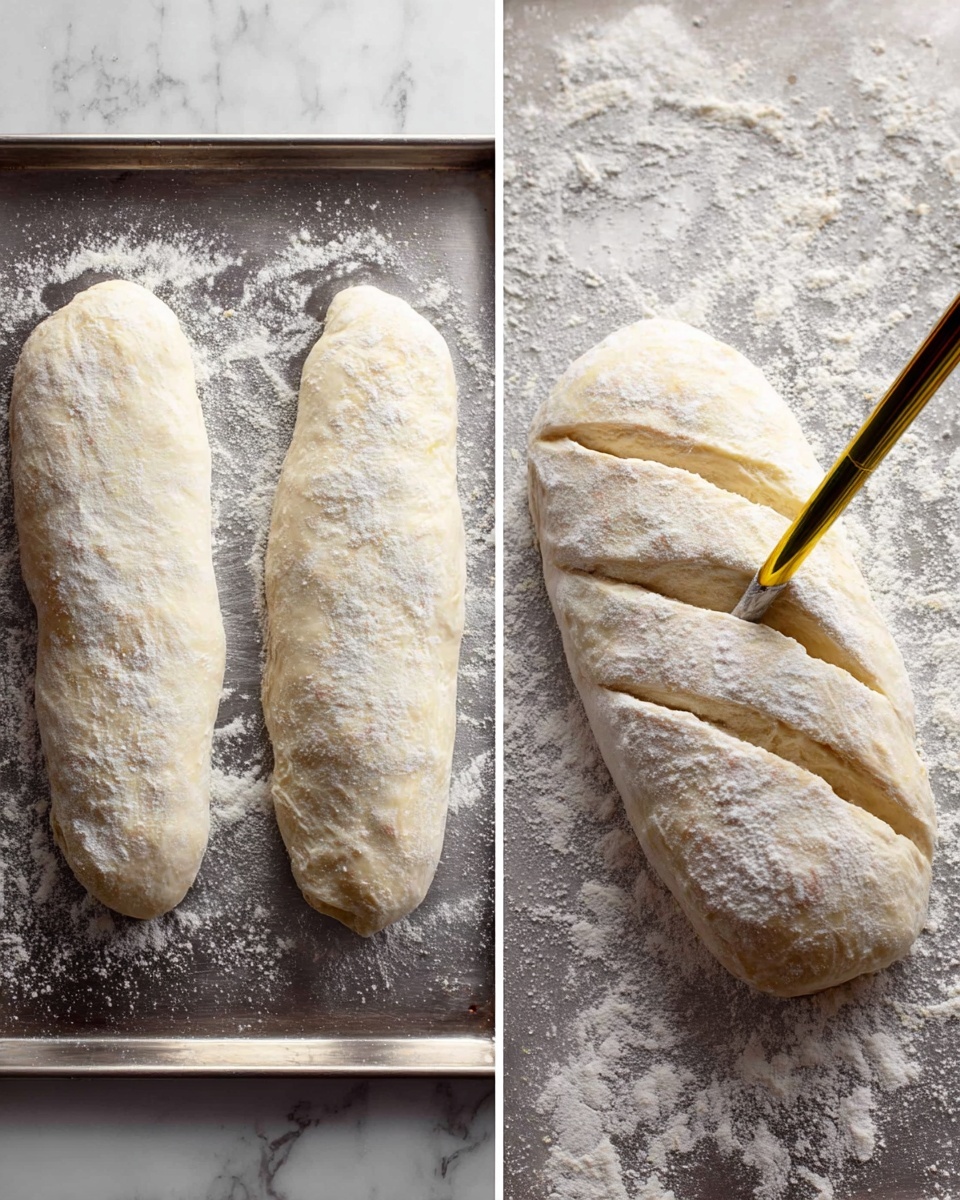
Lightly dust a large nonstick baking sheet with flour or cornmeal, then turn your cold dough out onto a floured surface. Cut it in half, shape each half into a rustic loaf about 9 by 3 inches, and place them on the baking sheet spaced evenly apart. Cover loosely and let rest for 45 minutes. This resting period lets your dough relax and rise again, helping set the shape before baking.
Step 5: Preheat Oven and Score Loaves
While your dough is resting, preheat your oven to a hot 475°F (246°C). When ready, use a sharp knife or bread lame to make three shallow slashes about half an inch deep across each loaf. This scoring controls how your bread expands in the oven and gives you that iconic artisan look.
Step 6: Add Steam for a Crusty Finish (Optional)
For a wonderfully crispy crust, place a metal pan or cast iron skillet on the bottom rack during preheating. When you’re ready to bake, carefully pour boiling water into this pan and quickly slide your dough into the oven. The trapped steam boosts crust formation, resulting in that delightful crunch that makes artisan bread so irresistible.
Step 7: Bake to Golden Perfection
Bake your loaves on the middle rack for 20 to 25 minutes until the crust is golden and firm. A gentle tap on the bottom of the loaf should sound hollow—an old baker’s trick to ensure doneness. For precision, the internal temperature should reach 195°F (90°C).
Step 8: Cool and Enjoy
Once baked, remove your beautiful artisan loaves from the oven and let them cool completely for at least 20 minutes before slicing. This resting time allows the crumb to set fully so your bread slices cleanly without squishing.
How to Serve Homemade Artisan Bread Recipe
Garnishes
While the bread shines on its own, try brushing your slices with a little garlic infused olive oil or a sprinkle of flaky sea salt to elevate every bite. Fresh herbs like rosemary or thyme also pair beautifully when added just before or after baking.
Side Dishes
This crusty bread is a versatile companion. Serve it alongside soups, stews, or salads to soak up delicious sauces. It also makes a fantastic base for bruschetta or a hearty sandwich filled with your favorite cheeses and cured meats.
Creative Ways to Present
For an impressive presentation, slice your loaves to form a fan shape on a wooden board or serve the bread hollowed out and filled with warm dips like spinach artichoke or hummus. When guests arrive, nothing beats tearing into a fragrant loaf straight from the oven.
Make Ahead and Storage
Storing Leftovers
Keep your Homemade Artisan Bread Recipe fresh by storing it loosely wrapped at room temperature for up to five days. Avoid airtight containers that trap moisture and soften the crust. Instead, a paper bag or bread box works wonders for maintaining texture and flavor.
Freezing
If you want to enjoy this bread later, wrap your cooled loaves tightly in plastic wrap and then foil before freezing. Frozen, the bread can last for up to three months and thaw beautifully without losing its crusty charm.
Reheating
To revive your artisan bread, sprinkle it lightly with water, wrap in foil, and warm in a 350°F (175°C) oven for 10-15 minutes. This method refreshes both crust and crumb, bringing your loaf back to life as if freshly baked.
FAQs
Can I make this bread without instant yeast?
This recipe specifically calls for instant yeast because it’s convenient and reliable. Using active dry yeast is possible but requires proofing in warm water before mixing and may slightly change the rising times.
Why does the dough need to rest in the refrigerator for so long?
The slow, cold fermentation enhances flavor, improves texture, and makes the dough easier to handle. Although you can skip this step, the depth of flavor and crust quality will be less pronounced.
What if I don’t have a bread lame for scoring?
No worries! A very sharp knife or even a clean kitchen scissors works perfectly to make the necessary cuts in the dough before baking.
Can I double the recipe for larger batches?
Absolutely! Just double the quantities and make sure to use a large enough bowl and baking sheets to give the dough space to rise and bake evenly.
How do I know when the bread is done baking?
The bread should have a deep golden brown crust and sound hollow when tapped on the bottom. An instant-read thermometer inserted inside the loaf should read around 195°F (90°C) for perfect doneness.
Final Thoughts
There’s something truly magical about pulling a loaf of fresh homemade bread from your oven and savoring that first crisp, chewy bite. This Homemade Artisan Bread Recipe brings bakery-quality bread into your kitchen with minimal fuss and maximum satisfaction. Give it a go—you might just find yourself baking bread every week!
PrintHomemade Artisan Bread Recipe

This homemade artisan bread recipe yields two beautiful rustic loaves with a golden, crispy crust and a soft, airy crumb inside. Crafted with simple ingredients and a long, slow rise for optimal flavor and texture, this recipe is perfect for bread lovers wanting to bake classic artisan-style bread at home with minimal hands-on time.
- Prep Time: 10 minutes
- Cook Time: 25 minutes
- Total Time: 4 hours 25 minutes plus 12-72 hours resting time
- Yield: 2 loaves (about 8 servings)
- Category: Baking
- Method: Baking
- Cuisine: Artisan, European-style
Ingredients
Dry Ingredients
- 3 and 1/4 cups (about 430g) bread flour (spooned & leveled), plus more for hands and pan
- 2 teaspoons (about 6g) instant yeast
- 2 teaspoons (about 9g) coarse salt
Wet Ingredients
- 1 and 1/2 cups (360ml) water, close to room temperature at about 70°F (21°C)
Optional
- Cornmeal for dusting pan
Instructions
- Mix Ingredients: In a large ungreased mixing bowl, whisk together the bread flour, instant yeast, and coarse salt. Pour in the water and gently mix with a silicone spatula or wooden spoon until all flour is moistened. The dough will be sticky and shaggy; use your hands to shape it into a ball in the bowl.
- First Rise: Cover the dough tightly with plastic wrap or aluminum foil and let it rise on the counter at room temperature for 2 to 3 hours, until it about doubles in size and is bubbly.
- Cold Fermentation: For best flavor and texture, place the covered dough in the refrigerator for 12 hours up to 3 days. The dough will puff then may deflate slightly, which is normal.
- Shape Loaves: Lightly dust a large nonstick baking sheet with flour or cornmeal. Turn cold dough onto a floured surface, cut in half with a sharp knife or bench scraper, and shape each piece into 9×3 inch loaves. Put loaves on the baking sheet about 3 inches apart. Cover loosely and rest for 45 minutes.
- Preheat Oven: During the resting period, preheat the oven to 475°F (246°C).
- Score Loaves: Just before baking, use a very sharp knife or bread lame to score each loaf with three 1/2 inch deep slashes. Reshape loaves if needed using floured hands.
- Create Steam (Optional): Place a shallow pan on the bottom rack of the oven and after it preheats and scoring is done, quickly pour 3-4 cups of boiling water into the pan and close the oven to trap steam, fostering a crispier crust.
- Bake Bread: Place the baking sheet with loaves on the center rack and bake for 20-25 minutes until the crust is golden brown. Tap the bottom of the loaf to check for a hollow sound or use a thermometer ensuring an internal temperature of 195°F (90°C).
- Cool and Store: Remove bread from oven and cool on a rack for at least 20 minutes before slicing. Store leftovers loosely covered at room temperature up to 5 days or refrigerated up to 1 week.
Notes
- Use coarse salt for better flavor and texture in the crust.
- A long, cold rise enhances flavor and texture but is optional.
- Steaming the oven during baking helps develop a crispier crust.
- Use bread flour for optimal gluten and chewiness.
- Ensure water is close to room temperature to avoid killing yeast.